
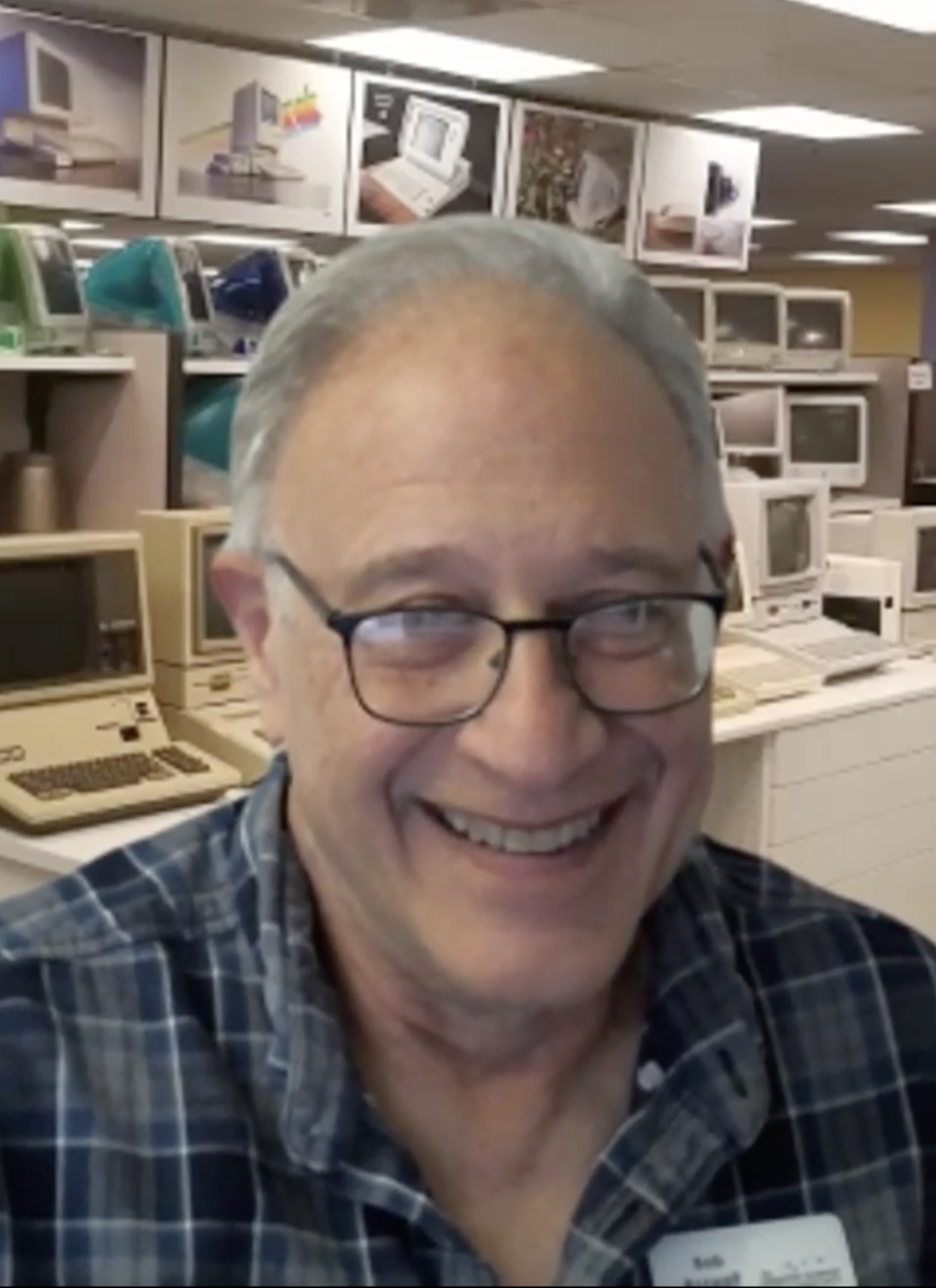
Bob Roswell
Co-founder/owner
System Source IT Systems Integration & System Source Computer Museum
Hunt Valley, MD
How did you get into the world of computing? How did you end up running a museum?
When I was 10, my great-aunt decided to get me some very primitive, tiny little plastic computers that were a few bucks a pop, and from there I ended up majoring in computer science. We opened up one of the early computer stores in 1981 and it’s been in business ever since. We ordered our initial inventory shortly before IBM announced the PC, and when it came out it was clearly better than anything that had come before it in the way of personal computers- so nobody bought the stuff we had in stock and we ended up putting it away. About a decade later, we set up a little room with a couple of the old unsold computers and kept adding to it.
What are some successes and challenges that you've experienced?
Well, the first and biggest success is that we're still in business after 44 years; that’s multiple lifetimes for the average business in the PC industry. As far as the museum is concerned, we’re inching our way up to being one of the better computer museums in the world. It’s hard to compare, but people who have been in the bigger, better-funded ones will sometimes tell us that they like certain things about ours better.
There are two challenges. The one that’s common to nearly all museums is getting enough people in the door, getting the word out. But beyond that, I would love to have better software displays; it’s hard to curate and explain software in a way that really makes it understandable, and I don't have great ideas for telling those stories yet.
What do you find compelling about the history of computers?
Absolutely nothing has progressed like computers. The Cray-1 we have here cost $19 million back when it was made, about $90 million in today's money. It weighs 5.5 tons and uses 115 kilowatts. An iPhone 11 is 1,000 times faster; the iPhone 17 is in the order of 10,000 times faster, and all that has evolved during the time I've been involved in the industry; it’s crazy. As for what made me want to start curating a museum and offering that as an educational tool, it's just a lot of fun to have people here and show them. There are a lot of computer collectors out there. Most people have their collections in their basement, attic, or a storage locker and bring them out maybe once a year to a vintage computer festival; I get to show my toys off almost every day.
What do students get out of a trip to the System Source Museum?
They get an appreciation of how things were. When you look at the more primitive computers, they’re much, much, much easier to understand. If you try playing tic tac-toe on a tic-tac-toe computer here, it's a pretty easy game and with a little bit of study you can understand how it works. But even if you know a lot about it, no one is going to understand in a literal sense how an Apple M4 with 82 billion transistors works. All gamers want high refresh monitors; if they look at the early video systems here, they'll see what it means to have a low refresh monitor that flickers like crazy because the hardware's just not fast enough and understand how far gaming technology has come to get to where it is now.
When students come here, they take the museum tour and will also do one or more workshops where they might learn some programming, which is fun for middle and high school kids; we don't have much to offer for earlier than that. They might do some soldering, or take apart and reassemble a computer and see what goes into it; how do you put the CPU and memory in? How do you upgrade the hard drive?Just getting their hands dirty. Nowadays, most people have laptops that aren’t so easy to take apart and put back together; if you take apart your iMac or MacBook Air and you haven't done it before, the chances of it back together are slim to none. People are much more likely to just take it to the Apple store, so getting to deal with hardware is a novel experience for most young people.
What’s new and exciting at the Museum?
Today, just 5 people signed up for the tour; 2 of them had been here for a swap meet that we held a couple weeks ago and the other 3 drove up from Northern Virginia. On Wednesday, I've got a group of homeschoolers. Sometimes we get continuing care retirement communities. Just last week, we had a high school and a middle school group in, and we’re expecting a couple hundred people the weekend after Thanksgiving.
We just lent our oldest computer to an unbelievably talented fellow who got it working, and it’s now the oldest functional computer in North America. He shows his projects on YouTube; last year, 450,000 people watched as he turned our computer on and had it playing Christmas music. He finished repairing it and shipped it back here recently and we'll be having an open house with him, which should be exciting.
I also love our newest exhibit. It's a working electromechanical telephone switch and has a great story to go along with it. Almon Strowger was an undertaker in Kansas City, Missouri in the 1880s. Back then, phones didn’t have dials or push buttons; you called an operator and she connected your call. Mr. Strowger got upset because he believed that the operator was sending all the business to her husband, who owned the competing funeral home. So Almon Strowger and his nephew invented the automatic dialing system, patented the dial telephone, and with it put a quarter million telephone girls out of business. It’s phenomenal to see it in person and actually use it.
Any advice?
For people who are going to visit the museum, watching films or reading books about computer history helps a lot. For example, if you watch Hidden Figures, when you come here you can use the calculators that you saw the human computers using in the movie. We're very lucky that we have the actual artifacts that were used in filming the movie here, including the computer that you see Octavia Spencer playing Dorothy Vaughn use. You’ll also learn a lot if you watch either of the movies about Steve Jobs. War Games also helps to give context around some of the different ideas in computing, especially hacking. If you've seen Tron, that was the first computer animated movie; it was done on Cray-1, which also plays a part in the movie. Even things that don't explicitly deal with computers, like the original Jurassic Park, which was the first movie animated by the Silicon Graphics computer, and it still looks pretty good when you watch it. Watching movies is always fun in the way of preparation. The more you know, the better the experience is here, but we'll take you wherever you are.