
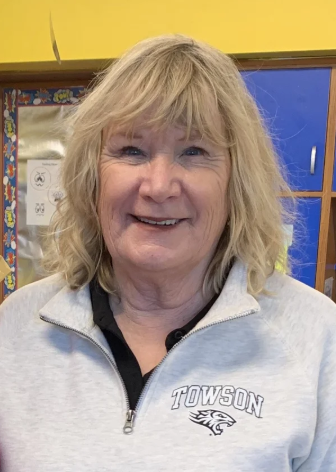
A longtime friend, collaborator, and five-time grant recipient of MCCE, LeaAnn Christenson PhD is a Professor of Early Childhood Education at Towson University's College of Education, as well as a CSTA Standards writer and published author.
LeaAnn is passionate about integrating Computer Science and Computational Thinking into her Courses and research in the area of Early Childhood Literacy for all children, including those who are Multi Language Learners *MLLs). Over the past 5 years, she has leveraged her MCCE grants to expand CS education for preservice teachers throughout Central Maryland, develop unplugged units at the Towson Child Care Center, collaborate internationally on Scratch Tactile and Micro:bits, run a book club in for in-service teachers in Baltimore City, and be the PI for an ambassadors program for in-service teachers.
Learn more about LeaAnn’s lifetime career in Early and Dual Language Education in her previous MCCE interview. Her books, Strength in Diversity: A Positive Approach to Dual-Languge Learners in Early Childhood and Dig In: Outdoor STEM Learning with Young Children are available for purchase online.
MCCE Grant Recipient Highlight:
LeaAnn Christenson, PhD
Past MCCE Grant Projects
I had two smaller grants back in 2023 which were about integrating Computational Thinking into my coursework, which is usually either Emergent Literacy (how to teach little kids to read), or Methodology for Dual Language Learners, both of which nest beautifully with CT. It’s very hands-on, and some of the problem solving is language-independent.
On the first of them, I worked with Bonnie Brown, the lecturer who at the time taught the course ECED 407: Interactive Technology and Young Children, to integrate CS and CT into my courses. There are always constraints, since we need to meet the requirements of MSDE and prepare our students to pass assessments, but CT and CS nest beautifully with that material and we succeeded in integrating them in our courses while maintaining the fidelity of the requirements.
With the second grant, I had our pre-service teachers partner with the Towson Child Care Center. The pre-service teachers planned Reads Aloud lessons that integrated a content area like Science or Social Studies with English Language Arts and created a follow up activity using Scratch Junior. The pre-service teachers then taught the same lesson at their internship, thus bringing what they had learned back to their public school placements in Baltimore City, Anne Arundel, Baltimore, and Howard Counties. In a lot of cases, they ended up doing some informal PD with their Mentor teachers, sharing the conceptual knowledge they had learned about CS/CT and the applications through Scratch Jr.
The technology class has evolved a lot over time and when it was being revised this year I was able to add developmentally appropriate applications to the CS/CT conceptual knowledge for young learners, including unplugged lessons and how to effectively teach beginning coding using tools like Scratch Jr. or robots. The title was changed to “Conceptual Understandings of Computer Science for Young Children.” It's not about devices, as they will evolve over time; it's about the underpinning concepts that teachers need to understand to support young children around CT and CS.
In 2024, we ran a summer program at the Towson Child Care Center where we developed unplugged units. One of our lecturers, Olivia Wright, headed the team and did most of the work with our pre-service interns; I was the PI and came to visit, observe, and evaluate. We returned in the summer of 2025 and refined three of the units: Chesapeake Bay, Simple Machines, and Getting Ready for Kindergarten.
In part because of this work, in 2025 I had the honor to be selected as one of the 22 members of the CSTA Standards writers. Over the past year and a half we have revised the standards to reflect the changes in CS education since they were last written. The revised CSTA standards will officially be unveiled at the CSTA national conference in July. My expertise helped to revise the K-5 standards, which will now include PK as part of the K standards, with suggestions on how to differentiate for 4 year olds. I’m excited that they’re included now; lots of states are moving to more public pre-K models, Head Start is serving four-year-olds here in Maryland, plus many private schools look to us for what they should be teaching their young children.
Current Grants & Projects
Currently, I have 2 active MCCE grants. For the first one I am working with Tim Dixon and Alissa Hozore; we have 4 projects:
We're working with Roger Olivella of Sistema THEAD in Spain, who has developed Scratch Tactile, a hands-on version of Scratch Jr. His original plan was for children who are blind, but he was wanting to investigate how these materials would work with young children. We recruited teachers to participate in his virtual training, which includes teachers literally across the globe.
We're working with Highlandtown, a private preschool in Baltimore City. They are participating in the Scratch Tactile project and have invited our pre-service teachers over the summer to teach some of the lessons that were developed at the Towson Child Care Center.
I've also been running a book club for many years with Moravia Park Elementary, a public school in Baltimore City. Tim and Elissa are currently doing most of the delivery on that. Our previous topics were working with dual-language learners and trauma-informed instruction; this year, I proposed a book study on CT, which was a new area for the school, and it's been going really well. We've been reading the Hello World by Raspberry Pi Big Book of Computing Pedagogy. Our sessions are usually virtual, but we have planned an in-person meetup to do some of the hands-on unplugged activities.
Baltimore City uses the Frog Street curriculum, so the teachers are taking what they're learning about CT from the book club and integrating it into those lessons. In my personal opinion, teachers taking ownership of these conceptual understandings and figuring out how to nest them into the existing required curriculum is most important. As much as I love the Chesapeake Bay unit and wish every child in Maryland had the chance to do it, the reality is that teachers are under more pressure than ever to teach the adopted curricula, so we need to be providing them with the knowledge and tools to include CT within those curricula.
The MCCE grant gave me the opportunity to be able to pay pre-service and in-service teachers for their participation in all these projects, particularly the Chesapeake Bay unit and the Getting Ready for Kindergarten unit.
I've also been working on embedding CT into my classes this year. I taught a Reading Methods course (how to teach little kids reading) in the fall, and this spring I’ll be teaching two sections on how to nest CT to serve dual language learners. I had my students complete assignments around pre-assessment, post-assessment of what they learned, so Tim, Elissa and I will have that data to look at after the school year. This group of students has already taken our reconfigured technology class, so I’m looking forward to comparing what we have learned from their class to last year’s, who didn’t have prior knowledge of CT. I know this year’s group will be able to hit the ground running; they still have some additional PD to complete through us, but they’ll be well prepared to teach those lessons, first at the child care center, then out in their placements.
I’m really happy with what we’ve accomplished on this project, and will be asking for an extension; I don't just spend the money fast enough. MCCE has been so good about giving us the time we need to do really meaningful things and not just buy stuff, and I really appreciate that.
On my most recent grant, I'm working with a group that already had past grants to create an Ambassadors program for in-service teachers. This grant provides funds for another cohort. I’m truly just the PI on this one; Elissa Hozore is delivering the virtual PD sessions in partnership with Kathy Benson and Clair Wise. We hope to plan an in-person followup over the summer. A little bit of money goes a long way; being able to pay teachers stipends really does increase engagement.
What’s Next?
MCCE just put out a call out that’s due pretty soon; we might be putting in for that. In a perfect world, we’d like to have another cohort of Ambassadors. I won’t be applying personally this time, since I have funds and work to finish up from my most recent grant, but do hope to apply again in the future. I've always been focused on best practices for early literacy development, and to me, CT is a complement to that work. Young children learn and solve problems best through hands-on experiences, not by sitting at desks doing paper work. CT gives gravitas to hands-on learning, i.e. play! That's my subversive goal in all of this, to promote and encourage playful learning for young children, and I feel really lucky to have had the funds to pursue it.